OUR HISTORY
The charm of a timeless place
Palazzo Pazzi Vitali: history, heritage and splendour
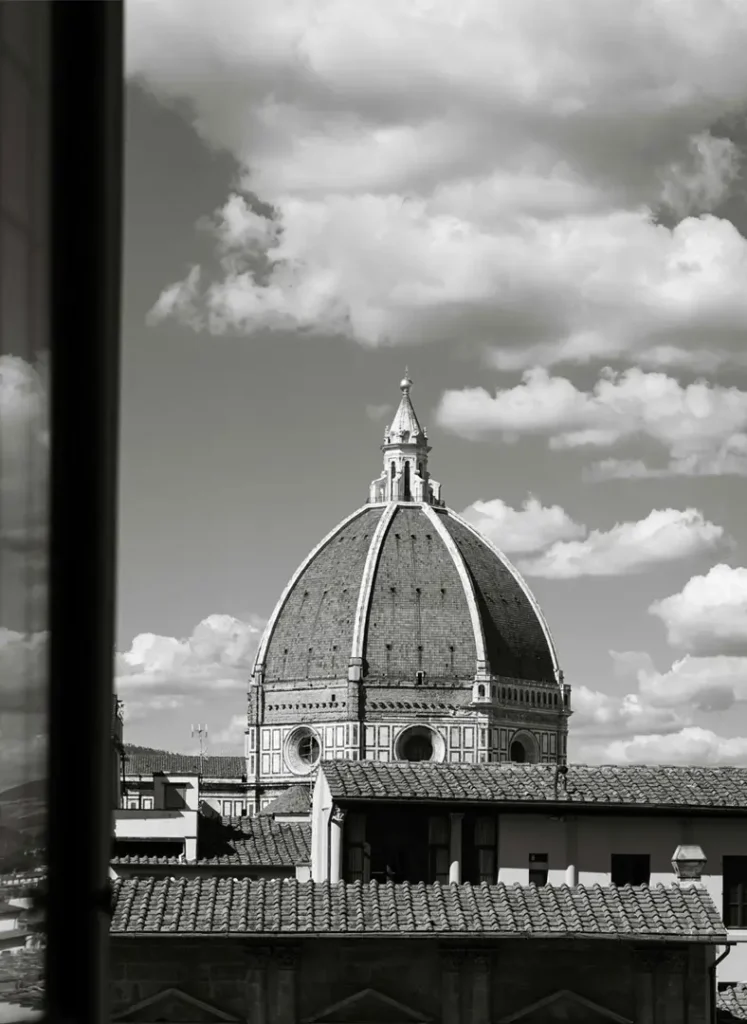
Among the Florentine alleys that tell of centuries of art and culture, Palazzo Pazzi Vitali stands with imposing elegance, a mansion that embodies the prestige of one of the city's most influential families. Every corner, every fresco, every architectural detail tells of a glorious past, of eras of grandeur, transformation and rebirth. A journey through time in which the Pazzi legacy is interwoven with the history of the city itself.

From its origins to its rediscovery: a palace as a witness to history
The roots of Palazzo Pazzi Vitali date back to the 15th century, when Guglielmo and Giovanni di Antonio de' Pazzi bought the building in 1476. However, the fate of the palace was marked by the political events of the time: after the famous Pazzi conspiracy, the palace was confiscated and passed to the Gherardini della Rosa family, only to be returned to its rightful owners a century later. It was at this time that the Residence took on its present form, thanks to a major architectural intervention attributed to the great Bartolomeo Ammannati or one of his close followers.

A hub of culture and innovation
In the 18th century the palace became the seat of the Accademia Colombaria, founded in 1735 by Giovanni Girolamo de' Pazzi. The building had a dovecote tower at the top, a space reserved for intellectuals and scholars who met to discuss philosophy, art and science. This place, steeped in knowledge and innovation, once again testifies to the deep connection between the Pazzi family and the cultural progress of Florence.
From the Pazzi family to Wital's vision
At the beginning of the 19th century, the villa changed hands again, this time to the Swiss businessman Wital, whose name was later Italianised to Vitali. Between 1830 and 1840, under his management, the villa underwent massive changes to adapt it to the tastes and needs of the time. The building was raised from three to four storeys and the structure was enlarged to accommodate new rental rooms.
In the second half of the nineteenth century, further works led to the saturation of the original green areas, with the construction of new wings of the palace and the progressive development of the surrounding area, in parallel with the construction of the large building of the Bank of Italy.


The 20th-century restoration: decline and rebirth
As is often the case with architectural masterpieces, Palazzo Pazzi Vitali also experienced a period of decline. Between the end of the nineteenth century and the beginning of the twentieth century, its structural condition deteriorated until, in 1908, municipal intervention was necessary to secure the façade. The flood of 1966 aggravated the decay of the building, but thanks to a careful and refined restoration carried out by the architect Luciano Capecchi between 1978 and 1982, the palace regained its former glory.


A gem of art and tradition
Today, Palazzo Pazzi Vitali is not only a historical building, but also a symbol of heritage and tradition. Its façade, dominated by the Pazzi coat of arms with two darting golden dolphins and floral crosses, contains symbolic details related to the legendary chariot bursting ceremony, a Florentine tradition rooted in the Middle Ages. The elegant broken tympanums, decorated with flaming vases and dolphins, testify to the link between this noble family and the spirituality of the city.
And it is precisely this heritage that makes Palazzo Pazzi Vitali not only an architectural jewel, but also a symbol of continuity, a bridge between the past and the future. Its charm lies in its ability to tell a story that belongs not only to the family that built it, but to everyone who crosses its threshold.
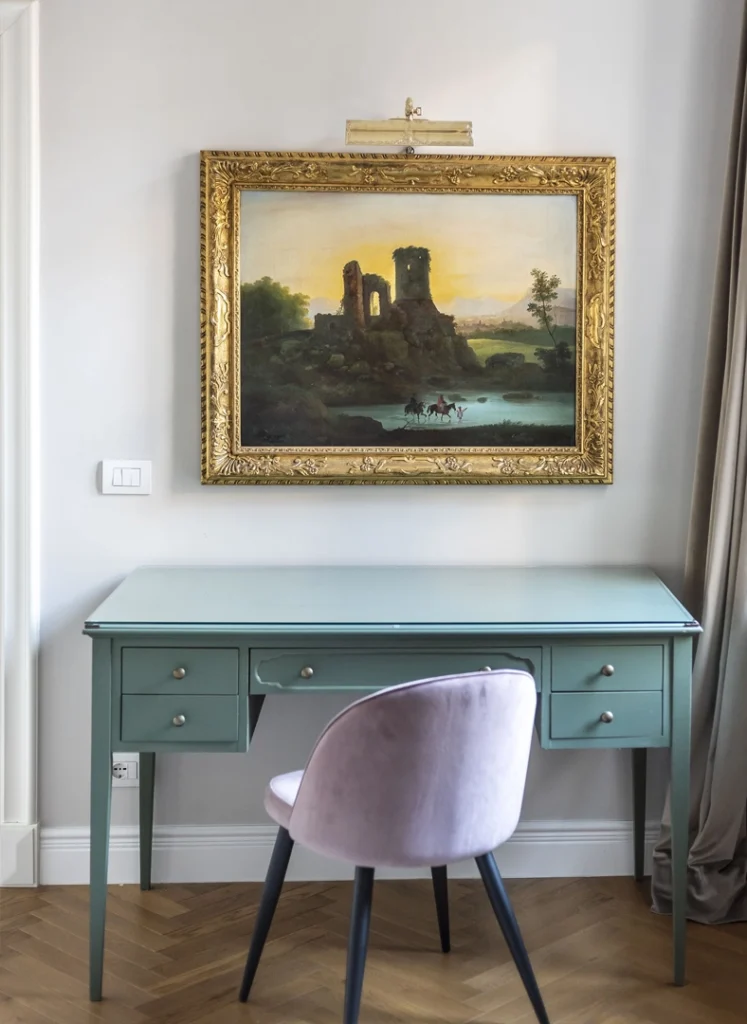
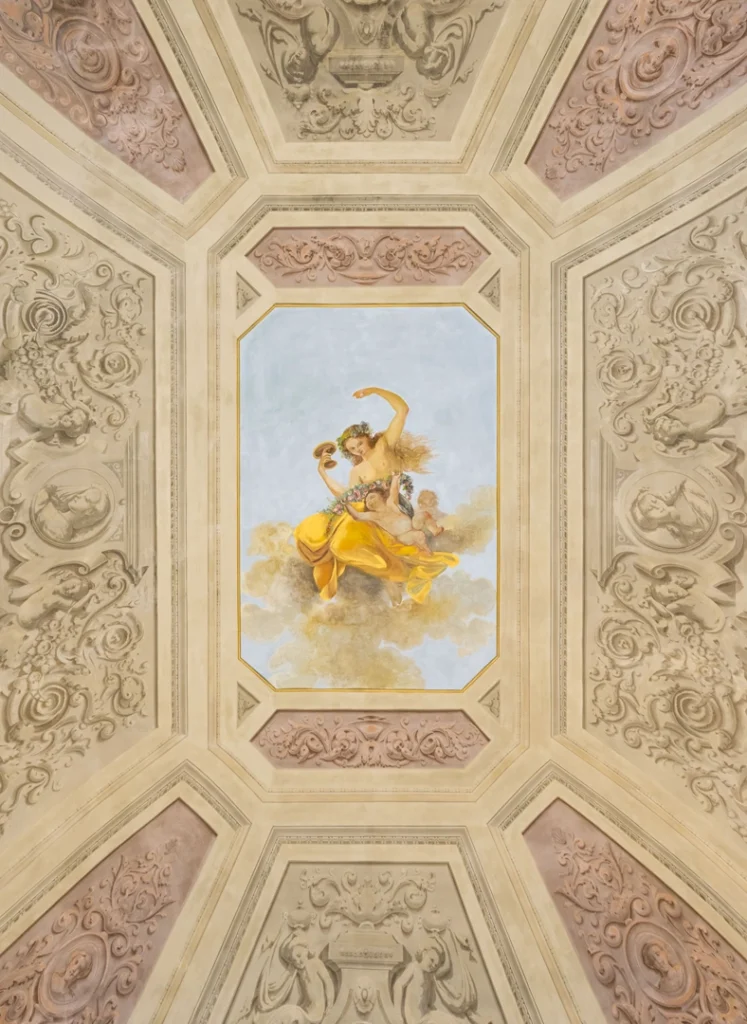
Centuries-old frescoes, ornate ceilings and inlaid woodwork tell of the elegance of an era that still echoes in its halls, while the golden light filtering through the windows seems to illuminate centuries of history with timeless beauty.
Today, Palazzo Pazzi Vitali is more than a place: it is an experience, a journey, a symbol of excellence and savoir-faire. Here luxury becomes storytelling, architecture becomes poetry and history becomes emotion.
Discover its essence. Experience the splendour of an era that still beats within its walls.